







By Stacie Sherman, Communications Director of Autism New Jersey
Autism New Jersey’s Public Policy Partners are schools and provider organizations that support our statewide work. In this article, we highlight an extraordinary staff member at one of those partners, Somerset Hills Learning Institute.
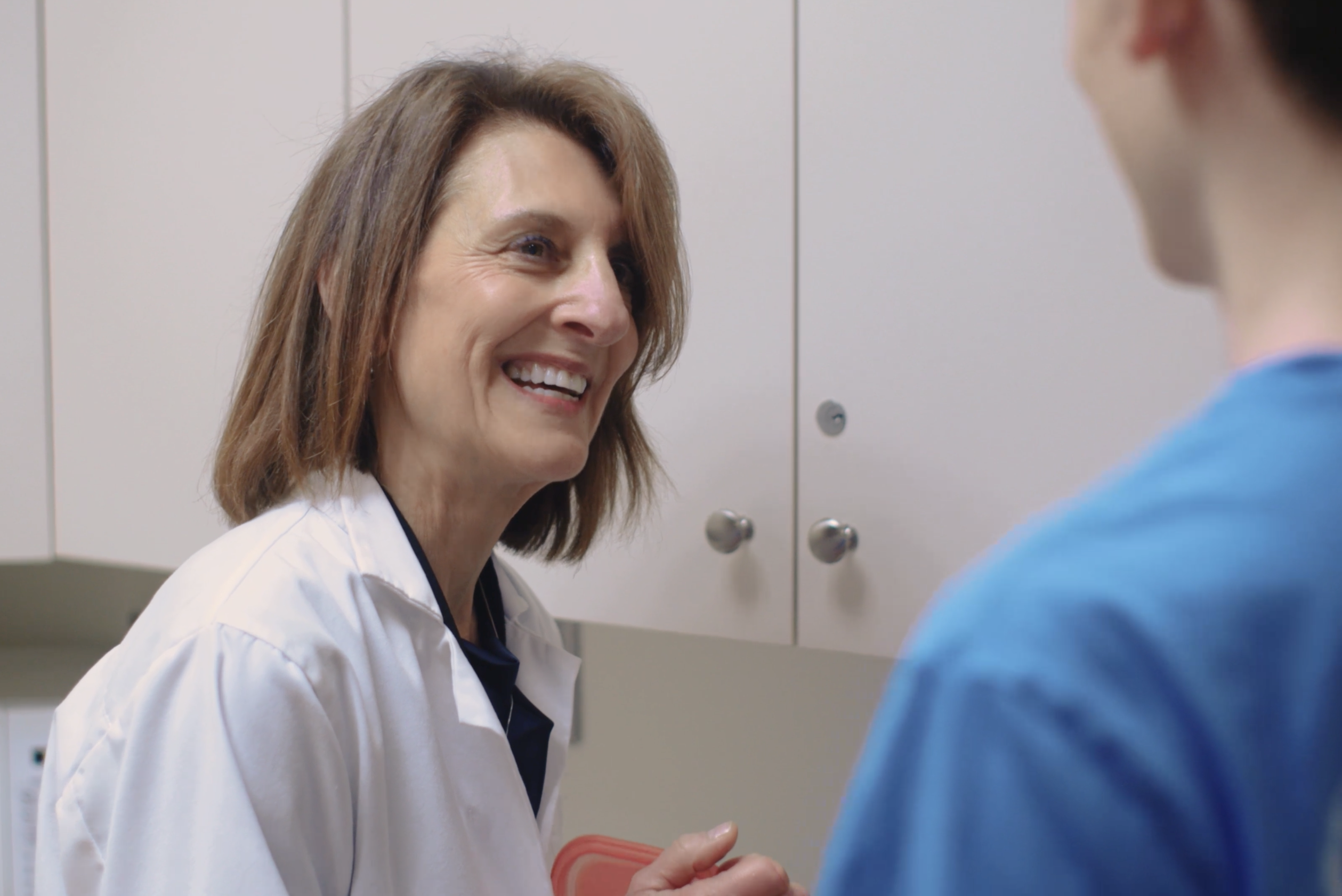
When Somerset Hills Learning Institute needed a school nurse in the early 2000s, they chose Debbie Brothers. Her extensive background in nursing homes, hospices, hospitals, and doctors’ offices, coupled with her work in the Institute’s preschool classroom operating from its behavior analytic foundations, allowed her to step into the role seamlessly.
 Debbie quickly became indispensable.
Twenty-four years later, after helping generations of students and shaping Somerset Hills’ approach to care, Debbie has retired.
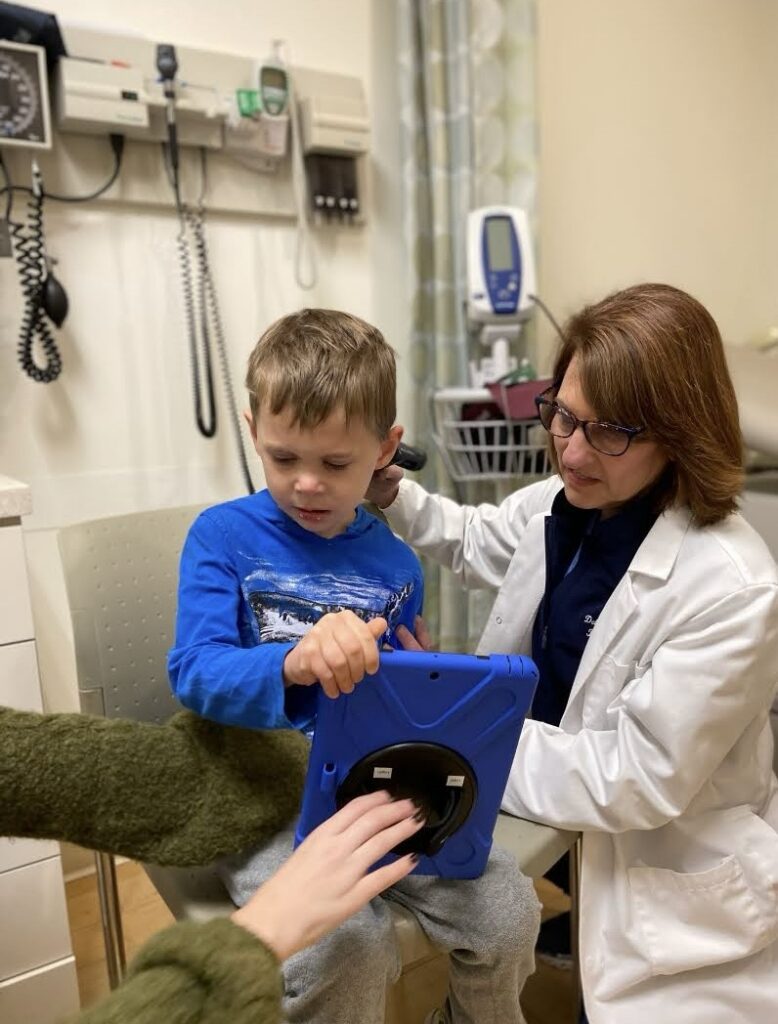
In her final weeks on the job, she taught her successor one of the most critical skills she developed: how to assess a child who may not be able to explain what is hurting or bothering them. That ability has become a hallmark of the Somerset Hills model, where identifying and addressing students’ health needs is viewed as essential to helping them learn and thrive.
Over the years, Debbie has identified numerous serious medical issues that might otherwise have gone unnoticed. In one case, a student’s only symptom of testicular torsion was a limp. In another, a boy who kept saying “pink” (his word for Motrin) was later found to have kidney stones.
“There are so many examples,” Debbie said. “From students who become aggressive because they’re constipated, to those rocking at their desks or pressing on their stomachs because they’re in pain. Figuring out what they’re experiencing, and how we can help, has been one of my main roles here.”
 Located in Bedminster, Somerset Hills serves 30 students from seven counties across New Jersey.
The school is a nonprofit dissemination site of the Princeton Child Development Institute, a nationally recognized leader in autism treatment. As a dissemination site, it operates from the same Applied Behavior Analysis (ABA) system variables established at PCDI by Drs. Patricia Krantz and Lynn McClannahan. In short, ABA is a data-driven therapy that uses positive reinforcement to help individuals learn new skills and reduce challenging behaviors.
As part of addressing a student’s behavior, the behavioral team at Somerset Hills would ask Debbie to determine whether a medical issue might be contributing to it.
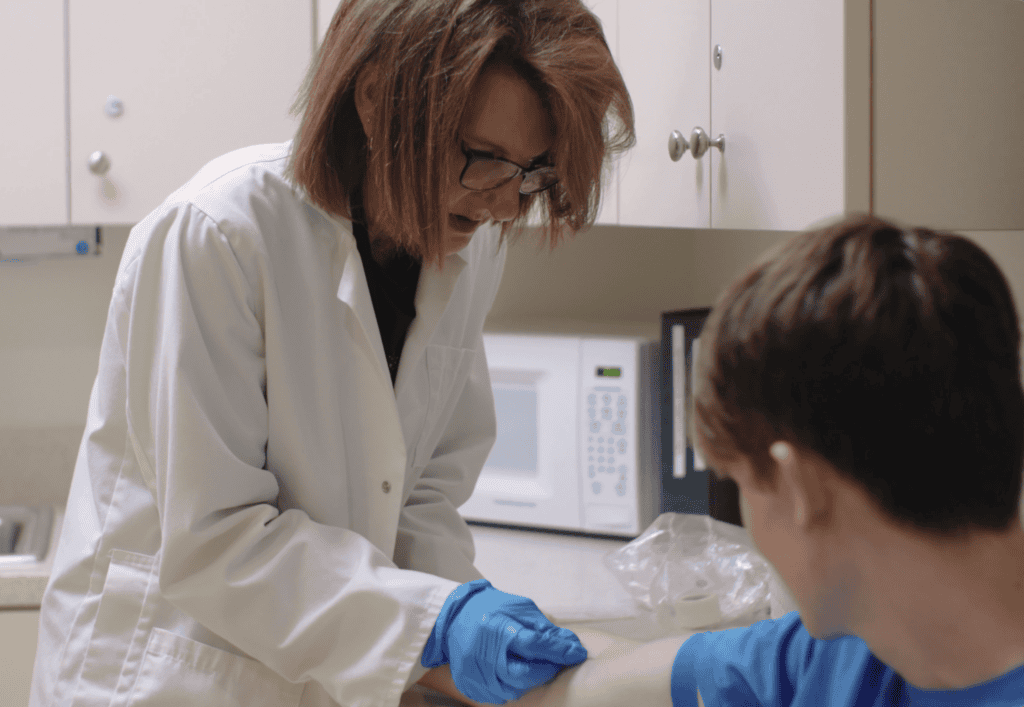 “I can tell you that at least half the time, there was,” she said.
Kevin Brothers, Ph.D., BCBA-D, Founding Executive Director of Somerset Hills Learning Institute, said Debbie “has been a tremendous asset to the families and this school.”
“She has an amazing ability to ask good questions, understand what may be happening in a person’s body, and recognize that children with autism don’t always show the same outward symptoms as others,” Kevin said.
Family members quickly came to rely on Debbie’s insight and support. Mittal Patel was one of them.
Mittal remembers meeting Debbie about nine years ago when her son Shlok became a student at Somerset Hills.
“I thought she would be a regular nurse, just supporting his medical needs,” Mittal said. “Pretty soon I realized she was much more than that.”
At the time, Shlok struggled with severe aggression and gastrointestinal issues, Mittal said. Debbie became deeply involved in helping the family, asking detailed questions about Shlok’s diet, bathroom habits, and moods. She accompanied them to medical appointments and helped Mittal explain concerns to the doctors. Often, Debbie recognized medical problems before the doctor, Mittal said.
Medical examinations were once so difficult for Shlok that it took five or six people to hold him down, Mittal said. After she explained the problem to Debbie, the nurse started a schoolwide program to help students become more familiar and less anxious with medical procedures.
Shlok, now 14, tolerates exams much more easily. With his gastrointestinal issues about “90% gone, the work of the behavioral team is taking hold,” his mother said.
“She has been a pillar of strength for me and so many others,” Mittal said.
At her retirement party in June, Debbie thanked her students and their families for giving her such a rewarding career.
“By working with you, a person with autism, I was given the gifts of patience, advocacy, and the understanding that teamwork can create a village strong enough to help you and many others with autism thrive. I learned to think outside the box and to understand that what works for one person with autism may not work for another,” Debbie said.
For the families she worked with, that impact is lasting.
“We are grateful for the partnership with Somerset Hills and for Debbie’s many contributions to the students they serve,” said Dr. Suzanne Buchanan, Executive Director of Autism New Jersey. “She helped give a voice to students who could not always speak for themselves and, in doing so, built an approach to care that can inspire schools everywhere.”
Coming soon: Debbie Brothers shares what school nurses need to know about providing quality care to people with autism.
Debbie’s work reflects the critical role healthcare professionals play in supporting students with autism. As we continue advocating for better access and higher‑quality care, your experiences help guide our efforts.
- We want to hear your healthcare story. Please take our survey to help us improve health outcomes for individuals with autism.
- Are you a school nurse who wants to learn more? Or a family member who wants to share their experience with a school nurse? Contact us at information@autismnj.org.
- As always, you can call our 800.4.AUTISM Helpline.