








While many New Jerseyans were adapting to the rapidly innovating internet technology, weathering the 2008 housing collapse, and purchasing their first smart phones in the mid-2010s, a collation of parents and autism advocates pressed on to formalize and enhance the support services the state has today.
The decade between 2005 and 2015 was the decade of nuanced policy discussions that led to major changes for both the statewide and national autism community. In former decades, advocates had achieved sustained recognition and awareness throughout the state and were able to establish some baseline special education services for children. Those initial cohorts of children with autism born in the 1970s and 1980s, who were among the first to benefit from the federal IDEA special education law, were now approaching middle age, and their parents were entering retirement.
Every year, more young adults who benefited from evidence-based practices in schools were growing up and aging out of the districts’ services, with few places to go after age 21 — encountering the metaphorical “services cliff” many families still experience today.
 It became clear the next urgent frontier for autism advocates was adult services, including group homes, employment support, and expanded insurance coverage.
As they had for decades, the experts at Autism New Jersey (then called COSAC) led the way.
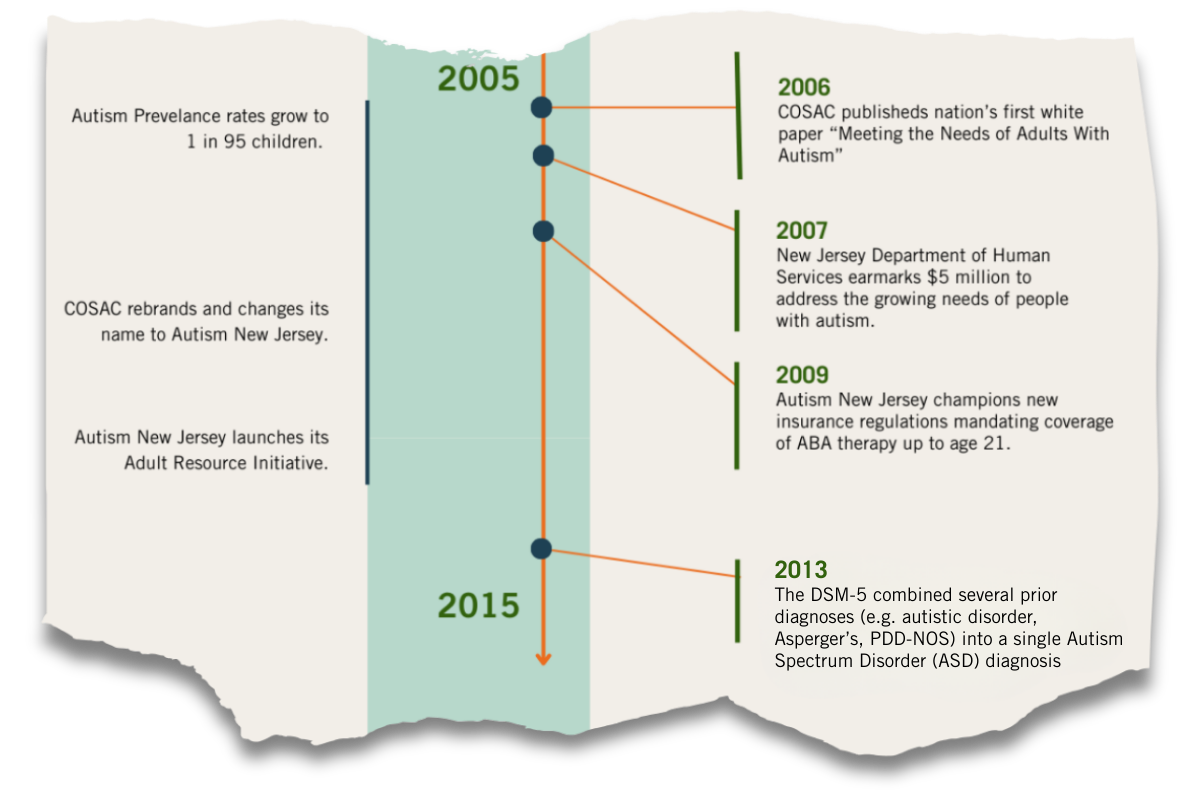
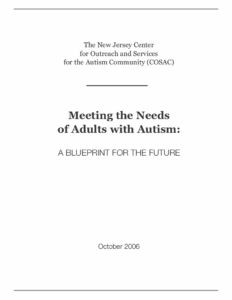
Dr. Suzanne Buchanan, now the executive director of Autism New Jersey, joined the staff in 2000 as the clinical director. She recalled that in 2006, the agency was the first in the nation to publish a white paper, or a research-based report with recommendations, on the need for adult services. The opening pages of the white paper told a story common to many families:
“Jeanne is a 21-year-old woman with autism. For 18 years, she attended a school program where she learned important life skills. But now that she has graduated, and for the foreseeable future, she spends her days idly sitting at home. Even worse, she now has frequent outbursts of self-injury, biting her arms and hands. She has begun to throw things and has destroyed property and broken windows, all behaviors that did not occur while she was in her school program. Because Jeanne has no place to go during the day, her mother left her job to stay home to care for Jeanne, leaving the family on one income.”
The 26-page report, supported by a state grant and authored by more than 50 Autism New Jersey volunteer parents and experts, spelled out the gaps in adult autism services. It pinpointed issues ranging from a lack of specialized day programs and respite services for exhausted parents, to lack of comprehensive case management services and personal finance planning options.
A year later, the state responded. In November 2007, the Department of Human Services dedicated $5 million dollars to address the “growing needs of people with autism.”
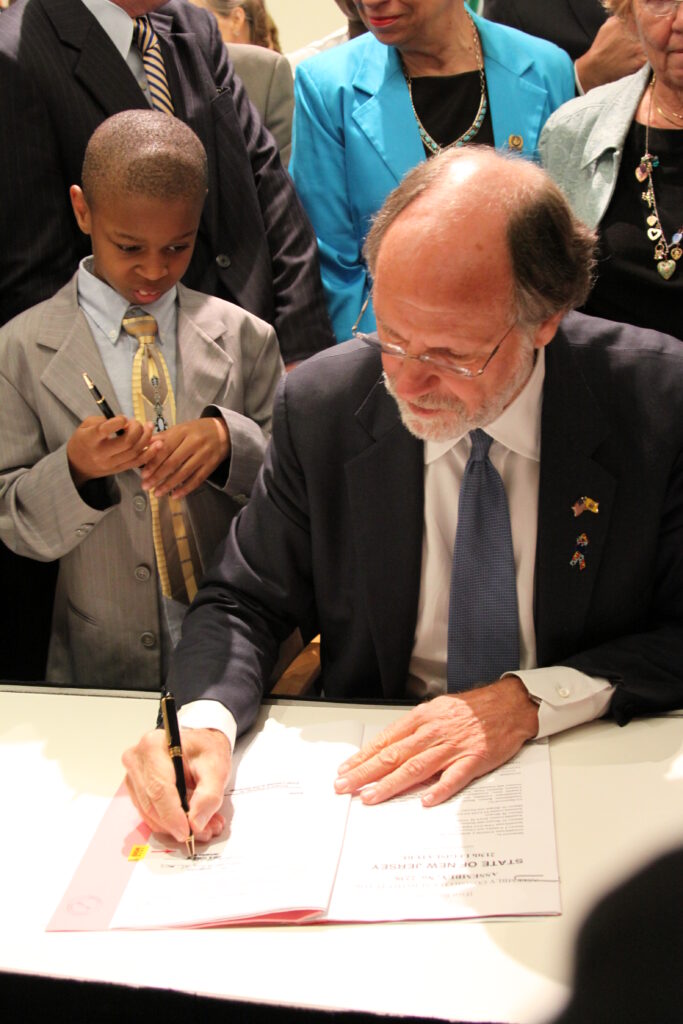
“Our first goal is to increase services and supports to adults with autism,” said Commissioner Jennifer Velez, who worked under Governor Jon Corzine, at a press conference at Hackensack University Medical Center. “This is absolutely critical because statistics show that, in New Jersey, one in 95 children is diagnosed with autism. That means there will be more services needed for children and adults in our communities.”Among the $5 million appropriation was $3 million dedicated to broadening adult services, and notably, $500,000 earmarked for the state’s first-ever autism registry. The registry system educates parents about early intervention, treatment options, and lifelong services. (The registry is still benefitting the autism community today, and parents can choose for their child to be included anonymously.)
Autism New Jersey leaders were invited to join statewide task forces, shape policy, and advise government leaders, all while continuing to support families through its signature helpline, support groups and seminars. A year later, in 2008, agency leaders decided they needed a new name; they found the “COSAC” acronym clunky and wanted their new brand to convey the agency’s deepening statewide impact, according to former board member Herb Hinkle. They decided on “Autism New Jersey.”
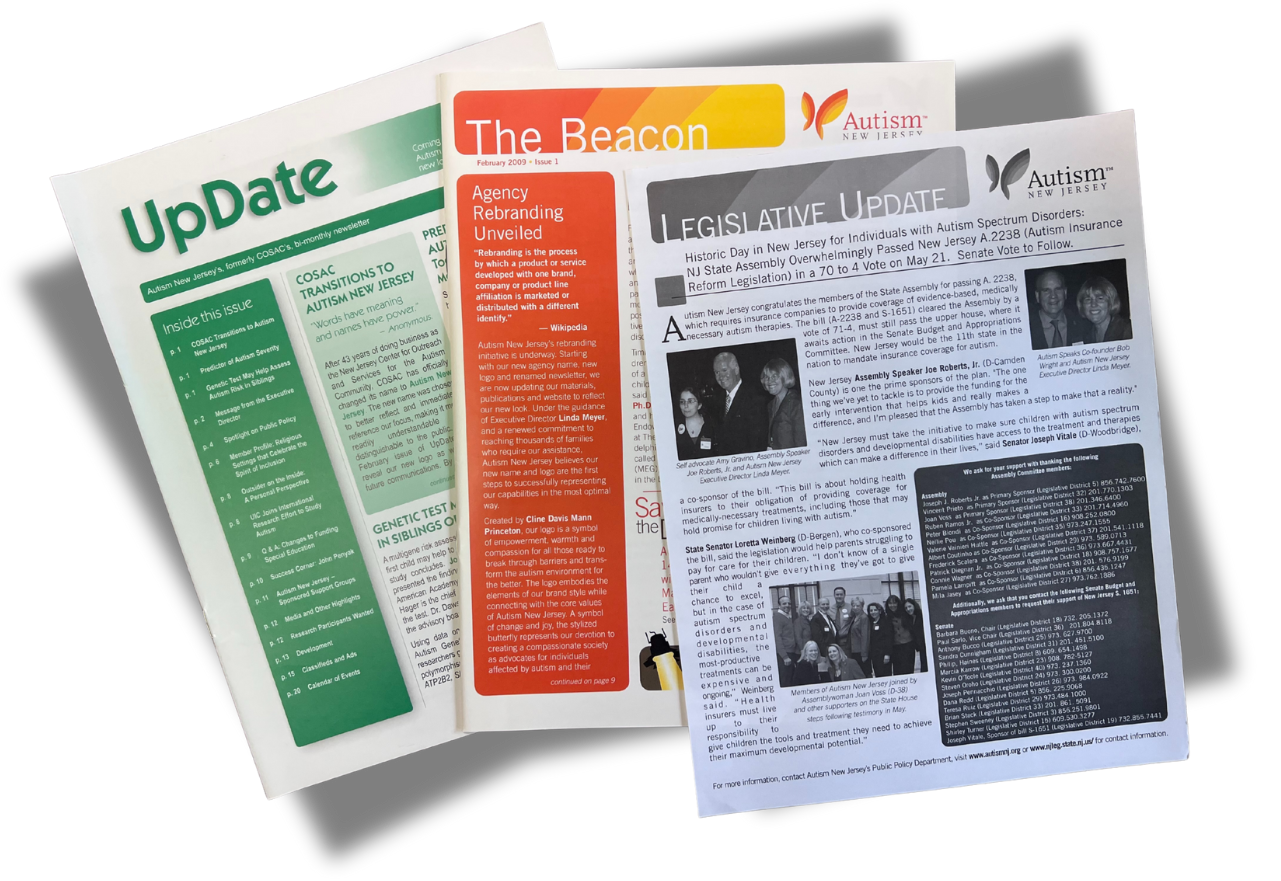

The renamed agency sent staffers to Trenton meeting rooms to represent the community on nuanced but important policy decisions. In 2009, in collaboration with national organizations, Autism New Jersey championed and helped pass new insurance regulations that mandated coverage of ABA therapy up to age 21, enabling more families to access the vital therapy. According to Buchanan, it wouldn’t have been possible without allies in state legislature, like Joseph J. Roberts Jr., retired speaker of the state General Assembly who sponsored two six-bill packages specific to autism.
However, just because there was a regulation forcing insurance coverage for the therapies didn’t mean coverage came easily.
Buchanan recounts numerous calls to the helpline around this time from providers because billing codes for ABA therapy didn’t exist, and they were therefore unable to secure payment for the services families desperately needed. Autism New Jersey went back to the table, this time with state regulators, healthcare providers, and insurance agencies, to hammer out the details until there were standardized codes and billing procedures.
While older parents continued to push for services for their adult children and Autism New Jersey experts focused on the nitty-gritty policy issues, a new generation of parents and self-advocates found their advocacy voice, too.
Building on the success of the advocates who came before them, parents with recently diagnosed children would come from across the state to Autism New Jersey’s Annual Conference or Hinkle’s evening seminars to learn the ins-and-outs of an Individualized Education Program, and trade tips on how to advocate for appropriate services from their local school districts.
School districts across the state began recognizing the need for in-district autism programs and realizing the cost-savings of keeping students in-district instead of sending them out of town. But education was never one-size-fits-all, and families often found themselves at odds with district administrators over what accommodations their child needed.
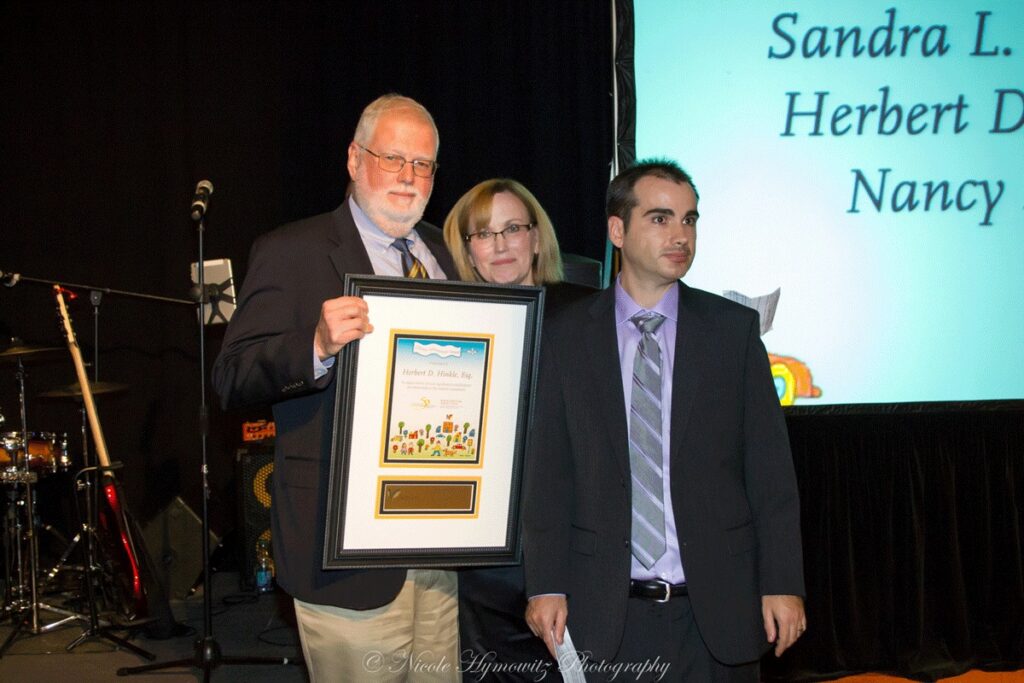
“Getting access to the right educational services always has been a struggle, and continues to be a struggle, especially in poorer districts,” said Hinkle, a New Jersey lawyer who represented disabilities continuously since 1974. “Students’ placements were dynamic, it could change year to year, and with almost 600 school districts operating in the state, it’s impossible that the need will ever be fully satisfied.”
Still, New Jersey was a leader, Hinkle said. Geographically, it’s a small state, but with several institutions of higher education and a very educated population, cutting-edge autism research and best practices often found their way to New Jersey schools and homes first, before spreading out to the rest of the country.
Of course, it helped to have a team of dedicated experts and passionate volunteers solely focused on making life better for the state’s autism community.“It’s essential to have organizations like Autism New Jersey,” Hinkle said.
Continue to explore Autism New Jersey’s 60 year history
Autism New Jersey: The First Decade 1965-1975
Passionate parents band together, form support group
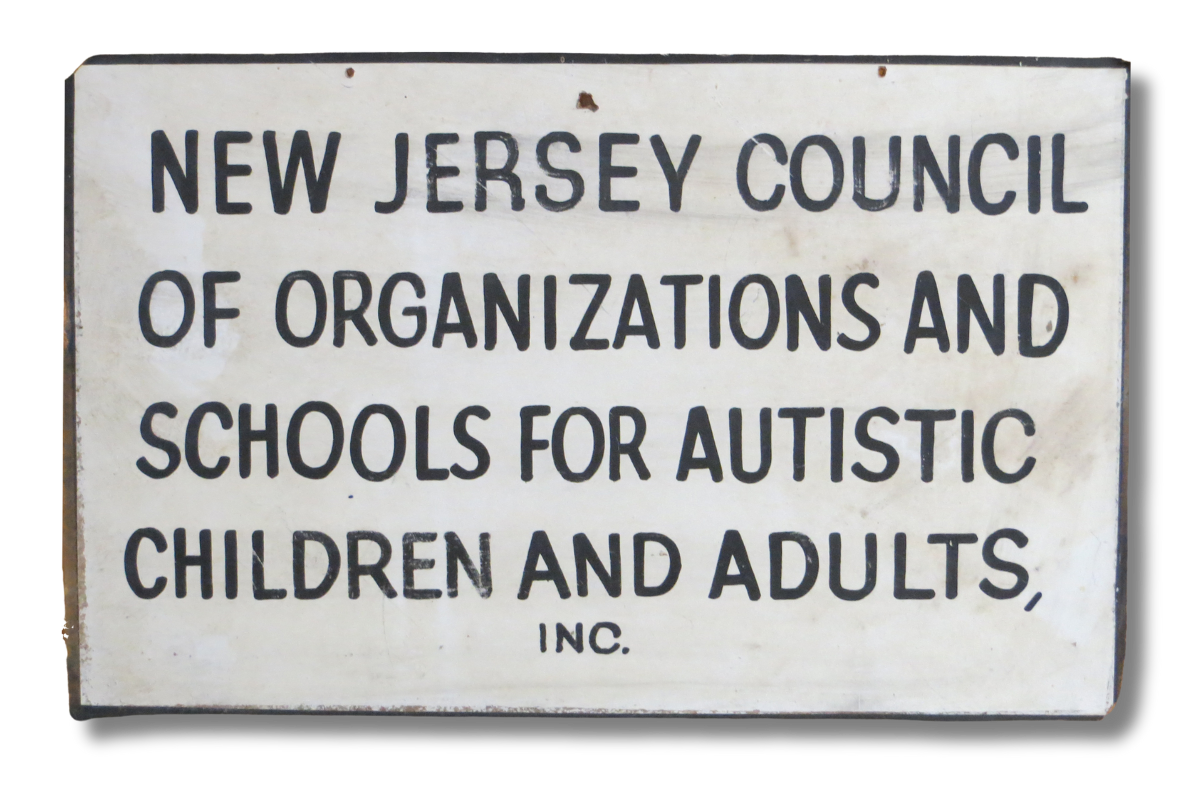
A group of parents were growing more and more concerned. Studies from 1965 indicated that about two to four in 10,000 children had autism, leading to the impression that the disorder was extremely rare.
These parents struggled to keep their children with developmental disabilities safe, access therapy, and find appropriate schooling. Their passion laid the foundation for what would eventually become Autism New Jersey. Read more>>
 Autism New Jersey: The Second Decade 1975-1985
 Autism New Jersey: The Second Decade 1975-1985
From Institutions to Inclusion: How New Jersey Parents and Advocates Reshaped the System.
The 1970s and 1980s were banner years for the autism community. Autism was finally listed in the DSM; advocates helped individuals with learning disabilities move from institutions and group homes; and from a tiny office in Princeton, New Jersey, Nancy Richardson was making history. Read more>>
Autism New Jersey: The Third Decade 1985-1995
 From ‘Rain Man’ to Real Change: How Advocates Transformed NJ’s Autism Landscape
For decades, parent groups like Autism New Jersey’s predecessor, COSAC, had been working to gain awareness for their children’s developmental disorders and funding for needed treatment and support. But almost overnight, the movie “Rain Man” brought the term “autism” into public consciousness. Read more>>
Autism New Jersey: The Fourth Decade 1995-2005
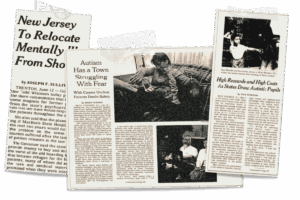 Breaking Barriers | How autism advocates rewrote New Jersey’s story for a new millennium.
In the late 1990s and early 2000s, New Jersey’s autism community grew increasingly organized, vocal, and influential.
As the world approached the new millennium, autism advocates across the nation hit their stride. They were organized. They knew their rights. And they had finally had evidence-based treatments and legislators in their corner. Read more>>
Autism New Jersey: The Fifth Decade 2005-2015
 While many New Jerseyans were adapting to the rapidly innovating internet technology, weathering the 2008 housing collapse, and purchasing their first smart phones in the mid-2010s, a collation of parents and autism advocates pressed on to formalize and enhance the support services the state has today.
The decade between 2005 and 2015 was the decade of nuanced policy discussions that led to major changes for both the statewide and national autism community.
Every year, more young adults who benefited from evidence-based practices in schools were growing up and aging out of the districts’ services, with few places to go after age 21 — encountering the metaphorical “services cliff” many families still experience today. Read more>>
Autism New Jersey: The Sixth Decade 2015-2025
 As we documented Autism New Jersey’s history, we didn’t have to look too far into the past to find sources of hope. The organization, led by Executive Director Suzanne Buchanan, has been at the forefront of progress in autism treatment, safety and services over the past decade.
Autism New Jersey staff cheered as Governor Phil Murphy signed into law a bill requiring Applied Behavior Analysis (ABA) practitioners to hold a license with the state. Just months later, due to Autism New Jersey’s continued advocacy, Medicaid/NJ FamilyCare began covering medically necessary ABA therapy for children under 21. Read more>>