



Choosing the right early education path for a child with autism can feel overwhelming. Preschool options vary widely depending on a child’s individual needs and families’ location.
Some students are placed in self-contained autism classrooms where they receive intensive, specialized support, including teaching methods based on Applied Behavior Analysis (ABA). Others might be placed in an inclusive classroom, where they receive services through an Individualized Education Program (IEP) and learn alongside neurotypical peers. Some children attend a typical preschool classroom, either with or without additional supports.
In certain situations, the local school district may not have an appropriate educational program for a specific student. When this happens, a child can be placed in an out-of-district public preschool or a private preschool. And, whether their local school has an appropriate program or not, some families opt out of preschool altogether, electing to enroll their child in a full-day ABA program funded by their health insurance.
Each option offers distinct benefits, and what’s best for you child is highly individualized and depends on your child’s developmental profile, your family’s values and priorities, and the resources available within your community.
Understanding the Options
Full-Day ABA
Some parents choose to send their children to a full-day, center-based ABA program instead of starting them in preschool. ABA is an evidence-based therapy that uses structured, individualized teaching to support the development of communication, social, academic, and daily living skills. In a full-day ABA program, children typically spend most of their time in one-on-one or small-group sessions focused on individualized goals. With support from trained behavioral professionals, children practice new skills while also learning strategies to reduce behaviors that may interfere with learning.
For more information about ABA, families can download a free copy of Applied Behavior Analysis and Autism: An Introduction or review this ABA Fact Sheet.
Preschool Options
Other families elect to send their children to preschool. When a child with autism enters preschool through the public school system, the school typically conducts an evaluation to better understand the child’s strengths, their needs, and areas where support may be helpful. These evaluations determine eligibility for special education services and inform decisions about appropriate classroom placement. For children age three and older, this process may result in the development of an Individualized Education Program (IEP), which outlines individualized goals, accommodations, and related services. Through an IEP, children may receive supports such as a one-to-one aide, speech therapy, occupational therapy, physical therapy, or even ABA services at no additional cost to families. These services can be provided across a range of placements, including general education, inclusive, or self-contained preschool settings.
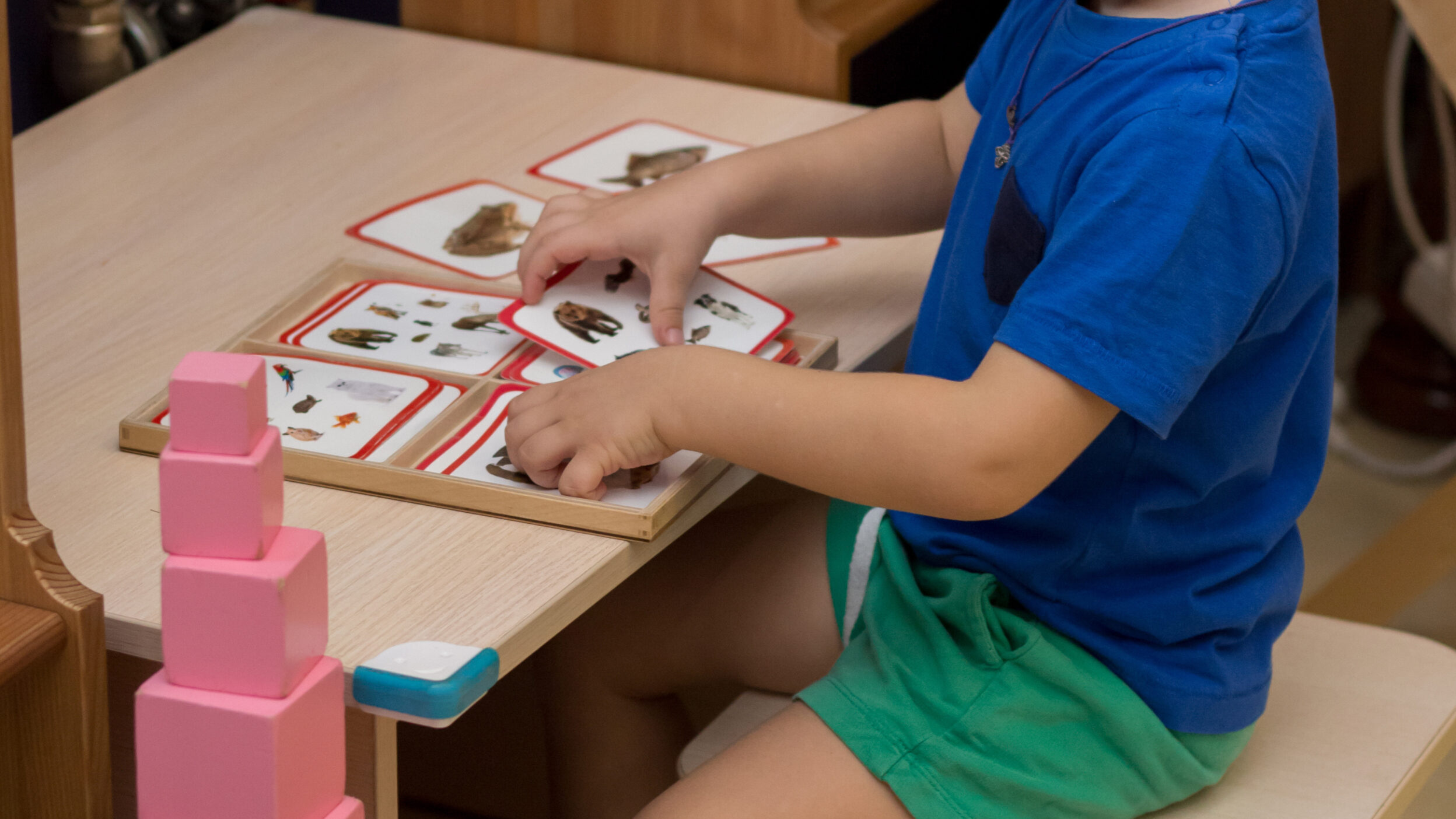
Preschool goals vary based on the school, classroom environment, and level of support a child requires. Unlike ABA clinics or centers, preschool classrooms are typically non-clinical, group-based learning environments. Inclusive and general education classrooms bring together children with autism and neurotypical peers and emphasize early socialization, daily routines, play-based learning, and readiness for academic skills. Learning alongside peers can be especially valuable for developing communication, imitation, and social interaction skills. Depending on a child’s IEP, supports may be provided within the classroom or through pull-out services.
Self-Contained Classrooms
In self-contained preschool classrooms, many, if not, all students have an IEP and individualized goals. Instruction focuses on foundational academic, social-emotional, communication, and self-help skills through highly structured, hands-on, and individualized activities. These classrooms often incorporate visual supports and therapeutic approaches, with an emphasis on communication, emotional understanding, independence, and engagement. Many self-contained programs also use ABA-based strategies to teach new skills and reduce behaviors that interfere with learning. These classrooms often include additional staffing, such as one-to-one aides and extra paraprofessionals, to support students’ individualized needs.
Private Preschool Options
Some families explore private preschool options, which may be paid for out of pocket or, in certain situations, funded by the school district if it is determined through the IEP process that the district cannot provide an appropriate program. Private preschools may offer general education, inclusive, or self-contained classrooms, with varying instructional approaches and levels of support. Some private schools, such as Alpine and Reed Academy, incorporate ABA strategies as part of their educational programming
Combining ABA and Preschool
In other cases, families may choose a combination of services, such as part-day preschool paired with part-day center-based ABA, to balance peer-based learning with more intensive individualized intervention.
Key Factors to Consider
Once families understand the different program options available, the next step is thinking about what will best support their child right now. The following factors can help guide that decision.
Your Goals for Your Child
Many parents begin by asking, “What do I want my child to gain most at this stage?”
If socialization and learning from peers are top priorities, a preschool setting may offer daily opportunities for interaction, routines, and group learning. However, some young children with autism do not yet learn social, communication, or self-direction skills through natural peer interaction alone. If skill development is the primary goal, such as building communication, attention, or independence, a full-day ABA program may provide the intensity and individualized instruction your child needs. It’s also important to remember that many self-contained preschool classrooms (private or public) incorporate ABA-based teaching strategies as well.
Readiness for Preschool
Preschool can be a wonderful experience, but it’s important to consider whether your child is ready to benefit from a group setting. You may want to ask yourself:
- Can my child communicate using words, gestures, pictures, or another method?
- Are they toilet trained, or beginning that process?
- Do they notice peers or attempt to play alongside them?
- Can they follow a group routine, even briefly?
If many of these skills are emerging, preschool may be a good fit. If not, full-day ABA may help build these foundational skills first, making a later transition to preschool more successful.
Structure and Learning Time
Many preschool programs are only a few hours per day. What happens after dismissal often depends on the home environment. If caregivers are able to provide structure, engagement, and learning opportunities in the afternoon, preschool hours may be sufficient. If afternoons are less structured, a full-day ABA program may offer more consistent learning time and support throughout the day.
Resources at Home and in the Community
Community resources also play a role in decision-making. For some families, the biggest benefit of preschool is peer interaction during the school day. Other families may already support socialization through playdates, siblings, recreational programs, or community activities. In those cases, families may prefer a full-day ABA program during the day to focus on skill development and generalization, while providing social opportunities during non-school hours.
Cost and Accessibility
Cost is another important factor. Preschool tuition varies widely. Some public preschool programs are free. Public school programs that include IEP services can be especially cost-effective for families. If a district cannot provide an appropriate program, a child may be placed in an out-of-district public school or private school at the district’s expense. Some families may also choose to pay for private preschool options independently as well.
Full-day ABA is often covered through insurance, but coverage depends on the plan and provider network. Even with coverage, families may be responsible for copays or coinsurance. When considering ABA, it’s helpful to review your insurance benefits and speak directly with the billing department of potential providers.
For more information about insurance coverage of ABA therapy, visit our insurance hub.
Research vs. Individual Fit
Research strongly supports early intensive behavioral intervention, such as ABA, for children with autism. With an IEP, children can also receive meaningful supports in preschool classrooms, though these services may not be as intensive as center-based ABA.
Still, no two children, and no two families, are the same. What works well for one child may not be the best fit for another.
|
|
There is no single “right” answer when choosing between preschool and full-day ABA, and even preschool itself is not one-size-fits-all. Some families find that preschool offers the social opportunities and school-based supports their child needs most, while others rely on full-day ABA to strengthen communication and foundational skills.
What matters most is whether your child is staying safe, making progress, gaining confidence, and finding joy in their daily experiences. And remember, this decision doesn’t have to be permanent. As your child grows and their needs change, their educational plan can change too.